
Wenchang ElectronicWire and cable solution provider


4News -> Industry
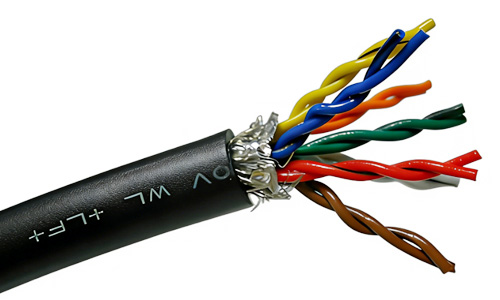
1. PVC sheath: The surface shows a regular "unevenness" caused by the compression of the inner braided net, indicating good processing quality and no relative sliding, which is a good cable; if the surface is smooth without any "unevenness" caused by the compression of the braided net, and the sheath feels loose when pinched by hand, it is a poor cable.
2. Inspect the braided shielding layer: Check if the braiding count is sufficient. For copper braiding, check the solderability. Scrutinize the tin-coated copper wire to see if there are copper wires inside. The hardness of aluminum-magnesium alloy wire is significantly greater than that of copper wire. Sparse braiding, uneven distribution, and poor tightness when wrapped with the insulating layer are signs of poor-quality cables.
3. Inspect the core wires: Diameter --- For SYV cables, it is 0.78 to 0.8mm; for SYWV cables, it is 1.0mm. Recently, there has been a type of SYV75-5 core wire with a diameter of 1.0mm. The characteristic impedance of this cable is definitely not 75 ohms, and it should not be used in 75 ohm transmission systems.
4. Check the adhesion between the core wire and the insulation layer: Cut the insulation layer at an angle, pull the core wire along the剥离 direction to see if there are any adhesion materials between the core wire and the insulation layer; good cables have a stronger adhesion, while poor cables do not have adhesion.
Longitudinal tensile test: Take a one-meter cable, peel off the core wire layer by layer, leaving 10 centimeters for the insulation layer, shielding layer, and outer sheath respectively.
The method is as follows: Hold the two adjacent layers of the cable with both hands and pull them in opposite directions. Generally, good cables cannot be pulled out with force, while poor cables can be easily pulled out without much effort.
2. Inspect the braided shielding layer: Check if the braiding count is sufficient. For copper braiding, check the solderability. Scrutinize the tin-coated copper wire to see if there are copper wires inside. The hardness of aluminum-magnesium alloy wire is significantly greater than that of copper wire. Sparse braiding, uneven distribution, and poor tightness when wrapped with the insulating layer are signs of poor-quality cables.
3. Inspect the core wires: Diameter --- For SYV cables, it is 0.78 to 0.8mm; for SYWV cables, it is 1.0mm. Recently, there has been a type of SYV75-5 core wire with a diameter of 1.0mm. The characteristic impedance of this cable is definitely not 75 ohms, and it should not be used in 75 ohm transmission systems.
4. Check the adhesion between the core wire and the insulation layer: Cut the insulation layer at an angle, pull the core wire along the剥离 direction to see if there are any adhesion materials between the core wire and the insulation layer; good cables have a stronger adhesion, while poor cables do not have adhesion.
Longitudinal tensile test: Take a one-meter cable, peel off the core wire layer by layer, leaving 10 centimeters for the insulation layer, shielding layer, and outer sheath respectively.
The method is as follows: Hold the two adjacent layers of the cable with both hands and pull them in opposite directions. Generally, good cables cannot be pulled out with force, while poor cables can be easily pulled out without much effort.
Specializing in wire and cable manufacturers
contact way
-
product
Robot wire Automotive wire communication cable Drag chain cable Electronic wire Flat cable series power cord more -
About Us
company profilecorporate cultureCompany imagingcertificationvideo -
application
electricity architecture Industrial Traffic Communication new energy petroleum Medical -
news
Company Industry Questions -
contact us
contact way
 qr code
tel+86 0769-8550 0878
Dongguan Wenchang Electronic Co., LTD 粤ICP备15115360号 【admin】
