
Wenchang ElectronicWire and cable solution provider


4News -> Questions
1. Check the certification mark. Products that have obtained mandatory certification must affix the certification mark, namely the "CCC" mark, on a prominent position of the product. Otherwise, they are considered un-certified products.
II. Review the inspection report. Electrical wires and cables, as products that affect personal and property safety, have always been a key area of government supervision. Regular manufacturers are subject to inspections by the supervisory authorities on a regular basis. Therefore, sellers should be able to provide inspection reports from the quality inspection department. Otherwise, there will be no basis for judging the quality of the products.
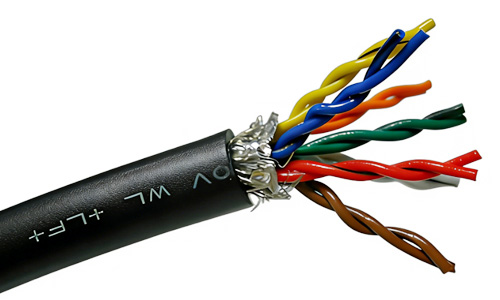
III. Insulation and sheath inspection. The thickness of the insulation and sheath should be uniform and without any skew. There should be obvious tension and elongation when touched. At the same time, the surface of the insulation and sheath should have continuous printing marks of the manufacturer's name and product model. The spacing of the marks: the insulation should not exceed 200mm, and the sheath should not exceed 500mm.
4. Observe the smoothness and color of the wire body. The copper conductor of the wire and cable is annealed copper wire with or without metal plating, and the aluminum conductor is aluminum or aluminum alloy wire. The surface is smooth. The copper conductor appears light purple, and the aluminum conductor appears silver-white. Otherwise, the conductor is likely to be contaminated with other impurities, thereby causing a decrease in conductivity.
V. Measure DC resistance. To ensure the quality of the purchased wires and cables, you can first cut off 3 to 5 meters of the product to be purchased and send it to the inspection agency for DC resistance measurement.
VI. Measuring Length. The national standard has specific regulations on the delivery length of wires and cables. The length of the coiled product should be 100 meters, and the length of the rolled product should be more than 100 meters. Consumers can measure according to the label marked length. The standard stipulates that the length error should not exceed 0.5% of the total length. If it fails to meet the lower limit of the standard, it is considered unqualified.
II. Review the inspection report. Electrical wires and cables, as products that affect personal and property safety, have always been a key area of government supervision. Regular manufacturers are subject to inspections by the supervisory authorities on a regular basis. Therefore, sellers should be able to provide inspection reports from the quality inspection department. Otherwise, there will be no basis for judging the quality of the products.
III. Insulation and sheath inspection. The thickness of the insulation and sheath should be uniform and without any skew. There should be obvious tension and elongation when touched. At the same time, the surface of the insulation and sheath should have continuous printing marks of the manufacturer's name and product model. The spacing of the marks: the insulation should not exceed 200mm, and the sheath should not exceed 500mm.
4. Observe the smoothness and color of the wire body. The copper conductor of the wire and cable is annealed copper wire with or without metal plating, and the aluminum conductor is aluminum or aluminum alloy wire. The surface is smooth. The copper conductor appears light purple, and the aluminum conductor appears silver-white. Otherwise, the conductor is likely to be contaminated with other impurities, thereby causing a decrease in conductivity.
V. Measure DC resistance. To ensure the quality of the purchased wires and cables, you can first cut off 3 to 5 meters of the product to be purchased and send it to the inspection agency for DC resistance measurement.
VI. Measuring Length. The national standard has specific regulations on the delivery length of wires and cables. The length of the coiled product should be 100 meters, and the length of the rolled product should be more than 100 meters. Consumers can measure according to the label marked length. The standard stipulates that the length error should not exceed 0.5% of the total length. If it fails to meet the lower limit of the standard, it is considered unqualified.
Specializing in wire and cable manufacturers
contact way
-
product
Robot wire Automotive wire communication cable Drag chain cable Electronic wire Flat cable series power cord more -
About Us
company profilecorporate cultureCompany imagingcertificationvideo -
application
electricity architecture Industrial Traffic Communication new energy petroleum Medical -
news
Company Industry Questions -
contact us
contact way
 qr code
tel+86 0769-8550 0878
Dongguan Wenchang Electronic Co., LTD 粤ICP备15115360号 【admin】
