
Wenchang ElectronicWire and cable solution provider

4application
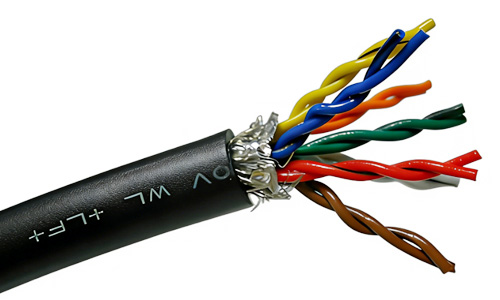
Drag chain cables, as a type of wire and cable, are widely used and have excellent performance. They belong to high-end cables and have a complex manufacturing process with high requirements. They possess a series of unique characteristics such as high flexibility, wear resistance, resistance to bending, oil resistance, resistance to bending, anti-tension, anti-twisting, anti-interference, anti-aging, etc. Most drag chain cables are used in flexible environments such as industrial electronic systems, automatic production lines, storage equipment, robots, servo motors, encoders, fire protection systems, cranes, CNC machines, and metallurgical industries. To prevent cables from tangling, wearing, being pulled out, hanging, and scattering, cables are often placed in cable drag chains for protection, and the cables can also move back and forth with the drag chains. When laying such cables, one should pay attention to the methods and procedures. If not done carefully, certain faults may occur during later use.
The first point is that the laying of the drag chain cable must not be bent. Since it protects the cable inside, if it is severely bent or twisted, it will seriously damage the internal cable, making the equipment unable to meet the user's requirements. During the laying process, the cable should be fully extended, and then it should be laid according to the actual application situation in a standard manner.
At this point, it is necessary to pay attention to the minimum bending radius of the cable. Long-term bending can cause the cable to deform.
When using the drag chain cable, it must be arranged loosely within the drag chain, and all the cables should not be squeezed together to avoid entanglement. This would also affect the use of the cable. Both ends of the cable must be fixed, or at least fixed at the moving end of the drag chain. Generally, the distance between the moving point of the cable and the end of the drag chain should be 20-30 times the diameter of the cable.
Once the drag chain cable is properly installed, do not forcibly move it at will. Doing so will cause the cable's position to deviate, thereby affecting the actual application effect.
Make sure that the cables can move freely within the bending radius, so that they can move relative to each other or with the guide device. After a period of operation, it is advisable to check the position of the cables. This check must be conducted after the pushing and pulling movement.
Apart from the above points, users also need to pay attention to the application location of the drag chain cable, and try to avoid using it in damp and high-temperature areas. Otherwise, it will cause the cable shell to oxidize and shorten its service life.
The first point is that the laying of the drag chain cable must not be bent. Since it protects the cable inside, if it is severely bent or twisted, it will seriously damage the internal cable, making the equipment unable to meet the user's requirements. During the laying process, the cable should be fully extended, and then it should be laid according to the actual application situation in a standard manner.
At this point, it is necessary to pay attention to the minimum bending radius of the cable. Long-term bending can cause the cable to deform.
When using the drag chain cable, it must be arranged loosely within the drag chain, and all the cables should not be squeezed together to avoid entanglement. This would also affect the use of the cable. Both ends of the cable must be fixed, or at least fixed at the moving end of the drag chain. Generally, the distance between the moving point of the cable and the end of the drag chain should be 20-30 times the diameter of the cable.
Once the drag chain cable is properly installed, do not forcibly move it at will. Doing so will cause the cable's position to deviate, thereby affecting the actual application effect.
Make sure that the cables can move freely within the bending radius, so that they can move relative to each other or with the guide device. After a period of operation, it is advisable to check the position of the cables. This check must be conducted after the pushing and pulling movement.
Apart from the above points, users also need to pay attention to the application location of the drag chain cable, and try to avoid using it in damp and high-temperature areas. Otherwise, it will cause the cable shell to oxidize and shorten its service life.
Prev:commumication
Specializing in wire and cable manufacturers
contact way
-
product
Robot wire Automotive wire communication cable Drag chain cable Electronic wire Flat cable series power cord more -
About Us
company profilecorporate cultureCompany imagingcertificationvideo -
application
electricity architecture Industrial Traffic Communication new energy petroleum Medical -
news
Company Industry Questions -
contact us
contact way
 qr code
tel+86 0769-8550 0878
Dongguan Wenchang Electronic Co., LTD 粤ICP备15115360号 【admin】
